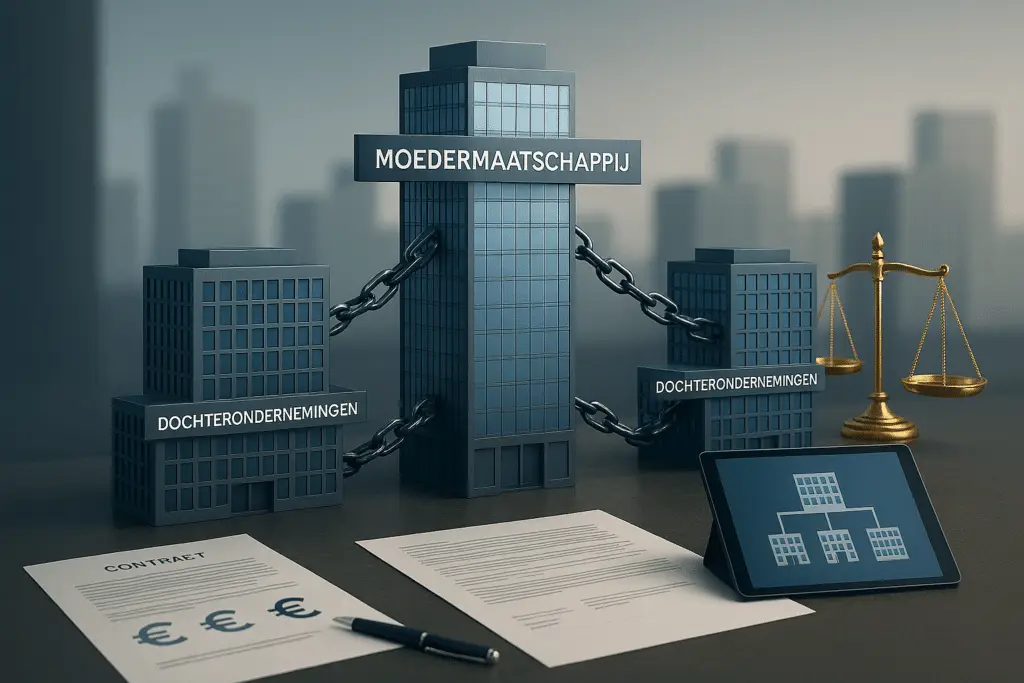
لا تتحمل الشركة الأم أو الشقيقة في هولندا مسؤولية ديون شركة أخرى ضمن المجموعة لمجرد امتلاكها أسهمها. وتنشأ المسؤولية بموجب إقرار المادة 403 من المادة 2:403 من القانون المدني الهولندي، أو بموجب مسؤولية المجموعة عن السلوك غير القانوني المشترك بموجب المادة 6:166 من القانون المدني الهولندي، أو من خلال إخلالها بواجب الرعاية تجاه دائني الشركة التابعة بموجب المادة 6:162 من القانون المدني الهولندي.
The 403 declaration is a voluntary written statement in which a parent accepts joint and several liability (hoofdelijke aansprakelijkheid) for debts arising from a subsidiary’s legal acts. Group liability under Article 6:166 BW makes every company that made a relevant contribution to unlawful conduct within a group liable for the whole of the resulting damage.
That distinction decides most disputes. A creditor of a collapsed subsidiary has to point to a declaration filed with the trade register, to unlawful conduct in which the parent took part, or to a breach of a duty of care the parent owed to the creditors. Below we set out the three routes, the case law that limits them, the defences of a group company, the withdrawal of a 403 declaration and the limitation periods.
ماذا تعني المسؤولية المؤسسية والجماعية في القانون الهولندي؟
ينطلق قانون الشركات الهولندي من مبدأ استقلالية كل كيان قانوني، وتُعدّ المسؤولية الجماعية الاستثناءات الوحيدة لهذا المبدأ. فكل شركة مدينة بديونها الخاصة؛ ولا يكون المساهم مسؤولاً من حيث المبدأ إلا عما تعهد بدفعه مقابل أسهمه.
A private limited company (besloten vennootschap, BV) owes its own debts; that is the point of the legal form, as explained in our guide to شركة ذات مسؤولية محدودةالمسؤولية الجماعية هي مجموعة الاستثناءات التي تمنع هذا الانفصال من أن يصبح درعاً للسلوك الذي يضر بالدائنين.
Two definitions matter before the exceptions do. Article 2:24a BW defines a subsidiary (dochtermaatschappij), essentially by reference to voting control or the power to appoint and dismiss the majority of the board. Article 2:24b BW defines a group (groep) as an economic unit in which legal entities and companies are organisationally connected. Whether a company belongs to a group is therefore a question of actual organisation, not of a label in an annual report.
Against that background, there are three bases of liability.
- Liability a parent takes on voluntarily through a 403 declaration.
- Group liability under Article 6:166 BW, imposed by law on companies that acted together unlawfully.
- The parent’s own wrongful act (onrechtmatige daad) under Article 6:162 BW, which is where the duty of care towards a subsidiary’s creditors comes in.
يمكن الاعتماد على الثلاثة جميعاً في نفس الإجراءات، وفي الواقع العملي عادة ما يكون الأمر كذلك.
متى يكون أحد الوالدين مسؤولاً بموجب إقرار 403؟
تُصبح الشركة الأم مسؤولة بموجب إقرار المادة 403 عندما تُقدم بيانًا خطيًا في السجل التجاري تُقر فيه بالمسؤولية التضامنية والتكافلية عن الديون الناشئة عن الأعمال القانونية لشركة تابعة مُحددة. بالنسبة للدائن، يُعد هذا الإجراء الأسهل، إذ يكفيه تقديم الإقرار وإثبات الدين.
يتم إيداع الإقرار رقم 403 في السجل التجاري لغرفة التجارة (KVKلا يُعدّ هذا الأمر منّةً للدائنين، بل هو ثمن الإعفاء. لا يُلزم أي شركة تابعة لمجموعة شركات، بموجب إقرار صحيح، بإعداد ونشر حساباتها السنوية الخاصة بموجب الباب 9 من الكتاب 2 من قانون الإفلاس الألماني، شريطة استيفاء الشروط الأخرى الواردة في المادة 2:403 من قانون الإفلاس الألماني.
وتشمل هذه الشروط أن يتم دمج أرقام الشركة التابعة للمجموعة في حسابات المجموعة لكيان قانوني آخر، وأن يكون المساهمون قد قدموا موافقة خطية على الإعفاء للسنة المالية، وأن يتم إيداع الموافقة والإقرار في السجل التجاري.
بالنسبة للدائن، لا يُشترط إثبات أي تأثير أو تورط أو خطأ. يكفي أن يُثبت الدائن الدين، ويُقدم إقرار الدين، ثم يُقاضي الوالد للحصول على كامل المبلغ. وبموجب المادة 6:7 من القانون المدني الألماني، فإن المسؤولية التضامنية تعني أن للدائن الحق في المطالبة بكامل المبلغ من أي من المدينين، وأن سداد أحدهما يُبرئ ذمة الآخر تجاه الدائن.
Two limits are worth knowing.
- The declaration covers debts arising from legal acts of the group company, so in essence contractual debts and their consequences. It is not a general guarantee for every liability the subsidiary might incur, and claims based on a wrongful act are in principle outside its scope.
- It only covers the entities named in it. In a group of fifteen companies, a declaration may exist for three. You check this by consulting the trade register file and the subsidiary’s published accounts, where the exemption and the declaration are normally disclosed.
هل يمكن للوالد سحب الإقرار؟
نعم، لكن الانسحاب لا يُجدي إلا في المستقبل، وإنهاء الالتزامات المتبقية بالديون القديمة يتطلب إجراءً منفصلاً. ويحق للدائنين الاعتراض على هذا الإجراء خلال شهرين.
A parent may withdraw a 403 declaration at any time by filing a statement to that effect at the trade register, under Article 2:404(1) BW. Under Article 2:404(2) BW, the parent remains liable for debts arising from legal acts performed before the withdrawal could be invoked against the creditor. That remaining liability (overblijvende aansprakelijkheid) is what a supplier with a long-running contract actually cares about.
Ending the remaining liability is a separate and much heavier exercise. Article 2:404(3) BW allows it only if all of the following conditions are met.
- The group company no longer belongs to the group.
- A notice of the intention to end the remaining liability has been available for inspection at the trade register for at least two months.
- At least two months have passed since that intention was announced in a nationally distributed daily newspaper.
- The creditor did not object in time, withdrew its objection, or its objection was finally dismissed.
The creditor’s tool here is opposition (verzet). Under Article 2:404(5) BW, a creditor whose claim is still covered can file a petition with the court within two months of the announcement. Under Article 2:404(4) BW, the creditor can demand security or another safeguard for its claim, unless the entity’s financial position already gives sufficient assurance of payment.
النتيجة العملية بسيطة. الدائن الذي يرى إعلانًا في صحيفة أو ملفًا في السجل التجاري ولا يتخذ أي إجراء لمدة شهرين قد يفقد حقه في الرجوع على الشركة الأم. أما الدائن الذي يتفاعل عادةً ما يحصل على ضمان.
متى تكون الشركات التابعة للمجموعة مسؤولة بموجب المادة 6:166 من القانون المدني الألماني؟
تُعتبر الشركات التابعة لمجموعة شركات مسؤولة بموجب المادة 6:166 من القانون المدني الألماني (BW) إذا شاركت كمجموعة في سلوك غير قانوني، وكان من المفترض أن يردعها خطر الضرر، ويمكن إسناد هذا السلوك إلى كل فرد منها. ويكون كل مشارك مسؤولاً حينها عن كامل الضرر.
Article 6:166 BW makes each member of a group that acts unlawfully jointly and severally liable for the whole of the damage, if the chance of causing damage should have restrained them from that conduct and the conduct can be attributed to them. The provision was not written for company groups; it applies to any group of persons acting together. Courts apply it to company groups only where the companies genuinely acted together; its value is that the individual causal contribution of each participant does not have to be established.
The claimant therefore does not need to show which company performed the decisive act. An example to illustrate: take a hypothetical group in which one company decides to dispose of waste unlawfully, a second arranges the transport and a third supplies the drums. Under the ordinary rules each of them would argue about its own share in causing the damage. Under Article 6:166 BW they are liable for the entire damage together, and the argument about shares moves to the internal settlement between them.
What the claimant does have to establish is threefold.
- There was conduct in group formation, rather than a series of unconnected acts.
- The risk of damage was such that it ought to have deterred the participants.
- The conduct can be attributed to the defendant in question.
يُبقي العنصر الثالث هذا البند ضمن حدوده. فالعضوية في مجموعة، أو امتلاك أسهم، أو علامة تجارية مشتركة، أو ميزانية موحدة، لا تُعدّ سلوكاً. ويتعين على المدعي أن يُشير إلى فعل قامت به الشركة نفسها، أو سمحت به عن علم.
قد يثير حادثٌ على مستوى المجموعة، كخلل أمني يؤثر على عملاء عدة شركات تابعة لها، تساؤلاتٍ مماثلة حول تحديد المسؤولية. تتناول مقالتنا حول المسؤولية بعد اختراق البيانات تحديدَ المسؤول في هذه الحالة.
ما هي وسائل الحماية التي تمتلكها كل شركة تابعة لمجموعة شركات؟
تتمثل أهم الدفوع في أن الشركة لم تُسهم بشكلٍ مباشر في السلوك الضار، وأن خطر الضرر لم يكن واضحاً لها. ويتم كسب أو خسارة كلا الأمرين بناءً على الوثائق.
يتمثل الدفاع الأساسي في غياب أي مساهمة ذات صلة في السلوك الذي تسبب في الضرر. فالشركة التي لم تقرر السلوك، ولم تنفذه، ولم تسهله عن علم، تقع خارج نطاق المادة 6:166 من القانون المدني الألماني، مهما كانت صلتها بالمجموعة وثيقة من الناحية المؤسسية. ولا يُعدّ تلقي أرباح عادية، أو مشاركة محاسب، أو التواجد في المبنى نفسه، أو الاستفادة بشكل غير مباشر من نشاط مربح ولكنه غير قانوني، مشاركةً في حد ذاته.
يتعلق الدفاع الثاني بإمكانية التنبؤ. تتطلب المسؤولية أن يكون احتمال وقوع الضرر كافياً لردع الأطراف المعنية. يمكن لشركة قامت بتوريد بضائع لشركة شقيقة بشروط تجارية عادية، دون أن تعلم أو يكون لديها سبب يدعو للشك في الغرض الذي ستُستخدم فيه هذه البضائع، أن تدّعي أن الخطر لم يكن ليردعها، لأنها لم تكن قادرة على رؤيته.
يعتمد كلا الدفاعين على الأدلة. يجب على المدعي أولاً تقديم وقائع يمكن الاستدلال منها على المشاركة في سلوك جماعي. أما المدعى عليه الذي يكتفي بالإنكار، فنادراً ما يُصدق بمجرد تقديم تلك الوقائع.
ما يُجدي نفعاً هو الأدلة الوثائقية: محاضر اجتماعات مجلس الإدارة التي تُثبت عدم استشارة المدعى عليه، والمراسلات التي تُثبت عدم إبلاغه، والهيكل التنظيمي الذي يُبين موقع سلطة اتخاذ القرار، واتفاقيات الإدارة التي نقلت النشاط إلى جهة أخرى. إن الوثائق التي تعود إلى تلك الفترة تُعدّ أكثر قيمة بكثير من إفادة شاهد كُتبت بعد رفع الدعوى.
متى يكون أحد الوالدين مسؤولاً قانونياً بدون تقديم إقرار 403؟
A parent can be liable to its subsidiary’s creditors for its own wrongful act under Article 6:162 BW, if it was closely involved in the subsidiary’s policy and knowingly let creditors bear the risk. The Supreme Court accepted this in the Comsys judgment.
In Comsys (Hoge Raad 11 September 2009, ECLI:NL:HR:2009:BH4033), the holding was sole shareholder and director of two subsidiaries: one employed the staff and bore the costs, the other contracted with and invoiced the clients. The cost-bearing subsidiary made losses from 1999, which were covered through current-account financing without its costs being fully recharged. When the bank ended the credit in 2003, it went bankrupt and its creditors were left unpaid.
The Supreme Court upheld the finding that the holding, as director, knew the structure would harm the subsidiary’s creditors once the financing stopped, and had done nothing to protect them. The claim was brought by the trustee in bankruptcy. The sister company was not liable: cooperating in the group’s division of tasks is not unlawful in itself.
تتمثل العناصر المتكررة في هذا النوع من السوابق القضائية في التكامل الإداري والمالي الوثيق، واعتماد الشركة التابعة ماليًا على الشركة الأم، ومعرفة الشركة الأم بأن السياسة المالية للمجموعة لا تسدد ديون الدائنين. وتُعدّ المشاركة المكثفة في سياسة الشركة التابعة، وترك المخاطر قائمة مع العلم بأن الدائنين سيتحملونها، وإعطاء انطباع مضلل عن ملاءة الشركة التابعة، هي الحالات التي يترتب عليها واجب المسؤولية.
لا يفرض القانون واجبًا عامًا للإنقاذ. فالشركة الأم غير ملزمة بتمويل شركة تابعة متعثرة، ولا بإبلاغ جميع الأطراف المقابلة بخسائر الشركة التابعة. ينشأ هذا الواجب من تدخل الشركة الأم نفسها. فإذا نأت الشركة الأم بنفسها عن التدخل، ولم تتدخل في قرارات الشركة التابعة التجارية، ولم تقدم أي ضمانات، يُطبق الحكم العادي، وينتهي حق الدائن في الرجوع إلى أصول الشركة التابعة.
متى يمكن تحميل أعضاء مجلس الإدارة المسؤولية الشخصية هو سؤال ذو صلة، تم تناوله في مقالنا حول مسؤولية مدير شركة ذات مسؤولية محدودة هولندية.
هل يختلف قانون المنافسة في الاتحاد الأوروبي؟
Yes. European competition law follows its own logic and should not be confused with the civil rules above. For the purpose of fining a cartel, the Court of Justice of the European Union treats a parent and a wholly owned subsidiary as one undertaking. It applies a rebuttable presumption that the parent exercised decisive influence over the subsidiary’s conduct, as confirmed in Akzo Nobel (Case C-97/08 P, 10 September 2009).
يجوز للشركة الأم دحض هذا الافتراض، ولكن فقط بأدلة ملموسة تثبت أن الشركة التابعة تصرفت باستقلالية في السوق. خارج نطاق قانون المنافسة، لا يوجد هذا الافتراض، ولا يمكن للمدعي الاستناد إليه لتسهيل دعواه المدنية.
ما المسار الذي ينبغي أن يسلكه الدائن؟
لا يُضطر الدائن للاختيار: فالمسارات تستند إلى أسس قانونية مختلفة ويمكن الاعتماد عليها مجتمعة. ويتبع الترتيب المنطقي عبء الإثبات، بدءًا من إقرار المادة 403 إن وُجد.
The routes can be pleaded together or in the alternative. The creditor cannot recover more than its actual loss: once one jointly and severally liable debtor has paid, Article 6:7 BW discharges the others towards the creditor.
عمليًا، يُحدد عبء الإثبات ترتيب الدعوى. فإذا وُجد إقرار صحيح بموجب المادة 403، يُعتبر هذا الإقرار هو الدعوى الأساسية، لأنه لا يتطلب أي شيء آخر غير الإقرار والدين. تليها مسؤولية المجموعة بموجب المادة 6:166 من القانون المدني الألماني: وهي تشمل دائرة أوسع من المدعى عليهم، ولكنها تتطلب دليلًا على السلوك المشترك وإمكانية التنبؤ به. أما الدعوى ضد الشركة الأم لخرقها واجب الرعاية، أو ضد المديرين الأفراد، فهي المستوى الثالث. إن تضمين هذه المستويات الثلاثة في أمر استدعاء واحد لا يُكلف الكثير من المال الإضافي، ويُبقي جميع الخيارات مفتوحة في حال فشل المستوى الأول.
| البعد | إعلان 403 (المادة 2:403 BW) | المسؤولية الجماعية (المادة 6:166 من القانون المدني الألماني) |
|---|---|---|
| ما يجب أن يكون موجوداً | إقرار مُقدم إلى السجل التجاري لم يتم إنهاء التزاماته المتبقية بشكل فعلي | سلوك غير قانوني في تشكيل المجموعة تسبب في أضرار |
| ما يجب على الدائن إثباته | الإعلان والدين | السلوك المشترك، وخطر الضرر المتوقع، ونسبة المسؤولية إلى كل مدعى عليه |
| من يمكن مخاطبته | الشركة التي أصدرت البيان، إلى جانب الشركة التابعة للمجموعة المذكورة فيه | كل شركة تابعة للمجموعة قدمت مساهمة ذات صلة |
| الدفاعات المتاحة | محدود: نطاق الإعلان، والإنهاء الفعلي، والتقييد | لا توجد مساهمة ذات صلة، ولا مخاطر متوقعة، ولا إسناد. |
| تحديد | يتبع الدين الأصلي، من حيث المبدأ، مطالبة الدفع التعاقدي، المادة 3:307 من القانون المدني الألماني | المادة 3:310 من قانون العقوبات: خمس سنوات من العلم، وعشرون سنة كحد أقصى |
قبل تقديم أي طلب، قم برسم خريطة للمجموعة. اطلب ملفات السجل التجاري للشركة التابعة ولكل كيان أعلى منها، واستخرج آخر الحسابات المنشورة، وحدد لكل شركة ما إذا كانت قد اتخذت قرارًا، أو نفذت مشروعًا، أو مولته، أو تلقت مدفوعات فقط. تحدد هذه الخريطة من سيتم ذكره في الاستدعاء وما يجب مناقشته ضد كل منهم.
في حال كانت الشركة التابعة معسرة بالفعل، يجب التمييز بدقة بين موقف الوصي وموقف الدائن. تشرح مقالتنا حول الطرف المقابل المعسر في الإجراءات القضائية هذا التفاعل.
ماذا لو كانت الشركة التابعة للمجموعة مفلسة بالفعل؟
يُغيّر إفلاس الشركة التابعة من يحق له رفع الدعوى وماذا يحق له المطالبة به. يقوم أمين التفليسة بجمع الدعاوى التي تضر بجميع الدائنين؛ ويحتفظ الدائن الفردي بحقه في المطالبة بالتعويض عن الضرر الذي لحق به فقط. ولا تتأثر الدعوى المقدمة بموجب إعلان المادة 403 بالإفلاس.
The trustee (curator) administers the estate and brings the claims that belong to the company itself, including the claim against its own directors for improper management. The Dutch Supreme Court has also long accepted that a trustee may bring a claim on behalf of the joint creditors against a third party whose wrongful conduct harmed them collectively, known after the Peeters/Gatzen judgment. The Comsys case was an example of a claim brought by the trustee. Where the trustee pursues that route, the proceeds fall into the estate and are distributed according to the statutory ranking.
يحتفظ الدائن الفردي بحقه في المطالبة إذا كان الضرر الذي لحق به خاصًا به، وليس مجرد انعكاس للخسارة التي تكبدها جميع الدائنين مجتمعين. فالمورد الذي أُجبر على الاستمرار في التوريد بعد أن علمت الشركة الأم بعجز الشركة التابعة عن السداد، له حق شخصي في المطالبة. أما الدائن الذي يشكو فقط من خلو التركة، فلا يحق له ذلك. إن التمييز بين الحالتين منذ البداية يمنع رفض الدعوى لعدم الاختصاص، كما أنه يوضح ما إذا كان من المجدي التوجه إلى أمين التفليسة للتنسيق بدلاً من التقاضي بشكل منفصل.
لا تتأثر مطالبة المادة 403 بإفلاس الشركة التابعة. فمسؤولية الشركة الأم قائمة بذاتها، وتُضاف إلى ديون الشركة التابعة. ويجوز للدائن مقاضاة الشركة الأم أثناء تقديم مطالبته في إجراءات الإفلاس. لكن لا يجوز له تحصيل المبلغ مرتين: فكل ما يحصل عليه من التركة يُخصم مما يمكنه استرداده من الشركة الأم.
How does a creditor combine the routes in practice?
An example to illustrate: a Dutch supplier delivers packaging for years to a distribution BV that belongs to an international group. The distribution BV goes bankrupt with an unpaid balance.
يقوم المورّد أولاً بالتحقق من السجل التجاري، فيجد أن الشركة القابضة الهولندية قدّمت إقراراً بموجب المادة 403 لصالح شركة التوزيع (BV). فيُقدّم المورّد مطالبته إلى أمين التفليسة، ويطالب في الوقت نفسه بالمبلغ الكامل من الشركة القابضة بموجب الإقرار. كما يُرسل خطاباتٍ تُنهي سريان التقادم إلى الشركة القابضة والشركة الشقيقة التي كانت تُدير عمليات الشراء للمجموعة، مع احتفاظه بحقوقه بموجب المادتين 6:166 و6:162 من القانون المدني الألماني في حال تبيّن سحب الإقرار في الوقت المناسب.
ما هي المدة المتاحة لرفع الدعوى؟
يسقط الحق في المطالبة بالتعويضات بموجب المادة 6:166 من القانون المدني الألماني بعد خمس سنوات من تاريخ علمك بالضرر والطرف المسؤول، بينما تسقط المطالبة بموجب المادة 403 بعد انقضاء مدة التقادم للدين الأصلي. وتُحتسب مدة التقادم بشكل منفصل لكل مدين ولكل أساس قانوني، وغالبًا ما تسقط دعاوى المسؤولية الجماعية بسبب التقادم أكثر من سقوطها بسبب جوهر الدعوى.
A claim for damages under Article 6:166 or 6:162 BW lapses five years after the day following the day you became aware of both the damage and the liable party, and in any event twenty years after the event (Article 3:310 BW). A claim under a 403 declaration follows the underlying debt; for a contractual payment claim that is five years from the day after it became due (Article 3:307 BW).
The clocks run separately for each debtor and each legal basis. Interrupting limitation against the parent does nothing for the claim against a sister company, so keep a matrix: one row per debtor, one column per legal basis.
Under Article 3:317 BW, limitation is interrupted by a written demand, or a written communication in which you unequivocally reserve your right to performance. Identify the debtor, describe the claim and its basis, state the amount or say it is not yet quantified, and reserve all rights expressly.
أرسلها بشكل منفصل إلى كل جهة، واحتفظ بإثبات الإرسال والاستلام، وكرر ذلك خلال كل فترة تقادم جديدة حتى يتم رفع الدعوى. كما أن إصدار أمر استدعاء يوقف سريان التقادم، شريطة متابعة الإجراءات.
Forfeiture of rights (rechtsverwerking) is a separate and narrow risk. The passage of time alone is not enough: the debtor must have gained a justified expectation that you will not enforce, or its position must have been unreasonably harmed by the delay. Negotiating while reserving rights in writing does not lead to forfeiture.
من يدفع في نهاية المطاف داخل المجموعة؟
تحدد المسؤولية التضامنية من يحق للدائن مقاضاته، لا من يتحمل الخسارة في النهاية. وبموجب المادة 6:166(2) من القانون المدني الألماني، يساهم المشاركون بحصص متساوية، ما لم تقتضِ العدالة تقسيمًا مختلفًا؛ وللشركة الأم التي تدفع بموجب إقرار 403 حق الرجوع على الشركة التابعة.
فيما يتعلق بالمسؤولية الجماعية، تنص المادة 6:166(2) من القانون المدني الألماني على أن يساهم المشاركون في التعويضات بالتساوي فيما بينهم، ما لم تقتضِ ظروف القضية توزيعًا مختلفًا لأسباب تتعلق بالعدالة. ويمكن تجاوز هذا التوزيع المتساوي بسهولة. إذ تنظر المحاكم في هوية متخذ القرار، ومن نفّذه، ومن كان يملك الوسائل لمنعه، ومن استفاد منه، ثم تعيد توزيع المسؤولية وفقًا لذلك. فالشركة التي نفّذت التعليمات فقط ولم تجنِ شيئًا عادةً ما تتحمل حصة ضئيلة، بينما تتحمل الشركة التي صممت العملية الجزء الأكبر.
عندما تستند المسؤولية إلى إقرار المادة 403، يختلف الوضع الداخلي تمامًا. فالشركة الأم التي تسدد ديون الشركة التابعة بموجب هذا الإقرار، يحق لها المطالبة من تلك الشركة التابعة بالمبلغ الذي دفعته. وفي الحالة المعتادة، عندما تكون الشركة التابعة معسرة، تكون قيمة هذه المطالبة ضئيلة للغاية. هذا هو الخطر الذي قبلته الشركة الأم مقابل الإعفاء من متطلبات الإبلاغ، ولذا ينبغي أن يكون منح هذا الإعفاء قرارًا مدروسًا بعناية، وليس قرارًا روتينيًا يتخذه المحاسب.
Groups can and should regulate the internal allocation in advance. A written intra-group agreement on indemnities, insurance and the allocation of liabilities per activity is enforceable between the parties, provided it is clear and does not lead to a result that is unacceptable under reasonableness and fairness. What such an agreement cannot do is bind the creditor: towards the outside world, each liable company still answers for the whole. Our overview of الأمن المالي في إطار قانون الشركات يتناول هذا الموضوع الأدوات المتاحة.
What should you check as a parent company or group company?
Your exposure is manageable if it is deliberate and documented. Check these points:
- Has every 403 declaration been a conscious financing decision, and do you review each year whether the reporting exemption under Article 2:403 BW is still worth the joint and several liability?
- Is each subsidiary’s decision-making demonstrably its own, with board minutes showing what the parent did and did not decide?
- Have you avoided assurances about a subsidiary’s solvency to its counterparties? Such statements are the classic route into a duty of care under Article 6:162 BW.
- Do intra-group agreements on indemnities, insurance and allocation of liabilities reflect what actually happens?
- As a sister company, have you recorded objections to risky group activities in writing at the time?
- If a subsidiary is in difficulty, have you taken advice and recorded why you chose to intervene or to abstain?
ما الذي يجب عليك التحقق منه بصفتك دائنًا؟
Speed matters more than anything else. Check these points:
- Is there a 403 declaration for your counterparty in the trade register of the Chamber of Commerce (KVK)? Check before the relationship goes wrong.
- Have you mapped the group: which entity decided, carried out, financed or merely received?
- Have you sent a separate letter interrupting limitation (Article 3:317 BW) to every possible defendant, on every legal basis?
- Are you watching the trade register and national newspapers for a notice ending a remaining liability? The two-month opposition period of Article 2:404(5) BW does not reopen.
- If the counterparty is bankrupt, is your damage your own, or only a reflection of the loss of all creditors that the trustee pursues?
في حالة إعسار الطرف المقابل، يتم توضيح الخيارات العملية في مقالنا حول عواقب إفلاس شريكك في العقد.
What can we do for you with corporate and group liability?
محامي الشركات advise parent companies, group companies and creditors on liability within group structures; further background is in our إرشادات قانون الشركاتفي الواقع العملي، نحن:
- check the trade register for 403 declarations and their withdrawal, and map who decided what within the group;
- assess whether a 403 declaration still makes sense for your group, and draft its withdrawal and the procedure ending the remaining liability under Article 2:404 BW;
- draft letters interrupting limitation against every possible defendant and on every legal basis;
- file opposition to the end of a remaining liability within the two-month period;
- defend group companies against claims under Article 6:166 or 6:162 BW, and bring recourse claims within the group;
- conduct proceedings before the civil courts and the Enterprise Chamber (Ondernemingskamer).
ملخص
- لا يُحمّل امتلاك الأسهم الشركة الأم مسؤولية ديون الشركة التابعة. تنشأ المسؤولية من إقرار بموجب المادة 403، أو من سلوك غير قانوني مشترك (المادة 6:166 من القانون المدني الألماني)، أو من إخلال الشركة الأم نفسها بواجب الرعاية (المادة 6:162 من القانون المدني الألماني).
- يجعل إعلان 403 الشركة الأم مسؤولة بالتضامن والتكافل عن الديون الناجمة عن الأعمال القانونية للشركة التابعة؛ ولا يسري الانسحاب إلا على المستقبل، ويمكن للدائنين الاعتراض على إنهاء المسؤولية المتبقية في غضون شهرين.
- بموجب المادة 6:166 من القانون المدني الألماني، فإن كل شركة تابعة للمجموعة قدمت مساهمة ذات صلة في السلوك غير القانوني للمجموعة تكون مسؤولة عن كامل الضرر؛ مجرد عضوية المجموعة لا تكفي.
- Under the Comsys case law, a parent that is closely involved and knowingly lets creditors bear the risk can breach a duty of care towards them.
- يسري التقادم بشكل منفصل لكل مدين ولكل أساس قانوني: يجب إيقافه كتابةً ضد كل مدعى عليه محتمل.
الأسئلة المتكررة
هل يمكن تحميل الشركة الأم المسؤولية دون تقديم إقرار 403؟
Yes. A parent that is closely involved in its subsidiary’s policy and knowingly lets creditors bear the risk can breach a duty of care towards them, which is a wrongful act under Article 6:162 BW (Hoge Raad, Comsys, 2009). It can also be liable for unlawful conduct in group formation under Article 6:166 BW. Owning the shares alone is not enough.
Can I as a creditor claim from both the parent and the subsidiary?
Yes, if both are liable. With joint and several liability you may claim the full amount from each liable party, but under Article 6:7 BW you cannot collect more than your total claim.
ماذا يحدث إذا تم سحب الإعلان رقم 403؟
Under Article 2:404 BW the parent remains liable for debts arising from legal acts performed before the withdrawal could be invoked against you. That remaining liability only ends after a separate procedure, which you can oppose within two months of the newspaper announcement.
كم من الوقت لديّ للمطالبة؟
A claim for damages based on group liability lapses five years after you became aware of the damage and the liable party, and at the latest twenty years after the event (Article 3:310 BW). A claim under a 403 declaration follows the limitation period of the underlying debt, usually five years from the due date for a contractual payment claim. You can interrupt limitation in writing under Article 3:317 BW.
هل يمكنني المطالبة من جميع شركات المجموعة؟
Only from those that are liable on a specific legal basis: the company that issued a 403 declaration, a parent that breached its own duty of care, or group companies that made a relevant contribution to the unlawful group conduct. Belonging to the same group is not enough.